
Nvidia and Microsoft Just Drew the Blueprint for the Personal AI Computer
For the past two years, the term “AI PC” has been thrown around so frequently that it has begun to lose meaning. Most announcements have amounted to little more than adding AI features to existing laptops and desktops. This week, however, Nvidia and Microsoft outlined something much more significant: a vision for a computer designed primarily for AI agents rather than traditional applications.
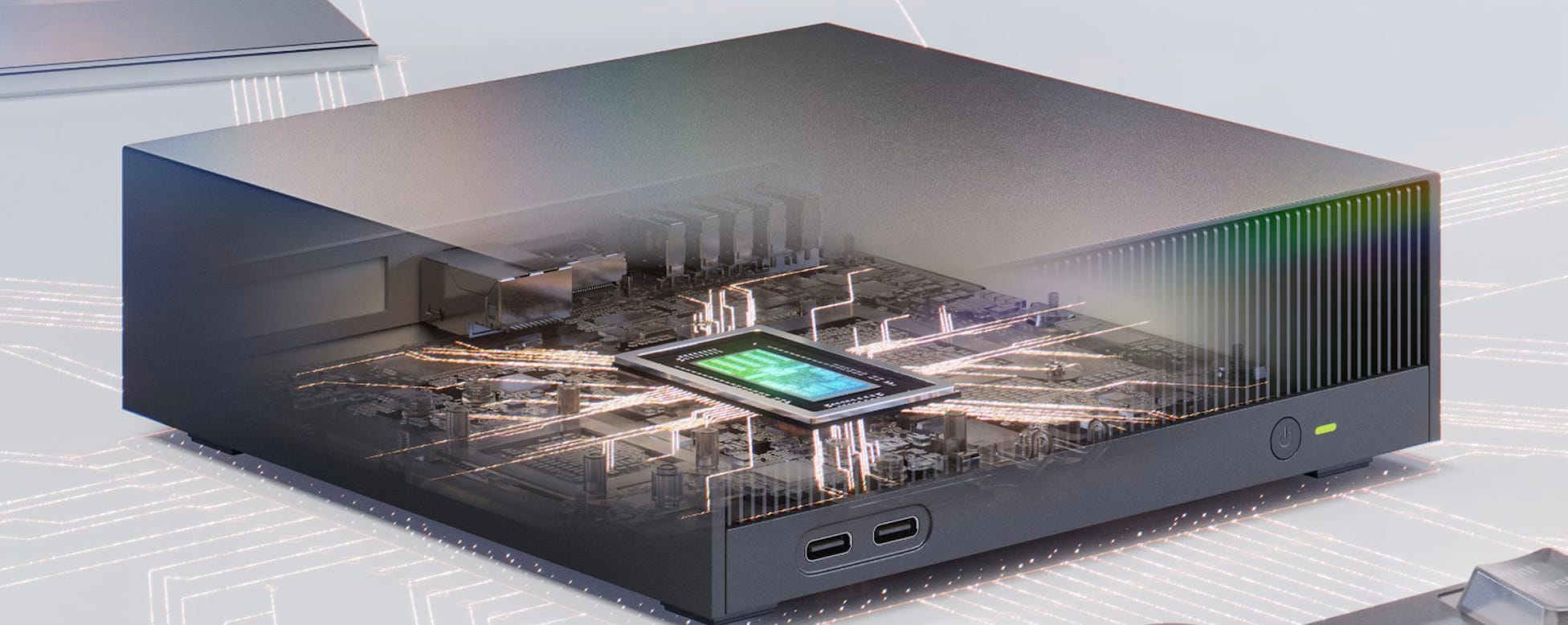
At the center of this vision is Nvidia’s new RTX Spark platform, a new class of AI-focused computing architecture that assumes our future interactions with technology will increasingly be mediated by intelligent agents acting on our behalf.
This matters because it represents a potential shift in the fundamental purpose of the personal computer. For decades, computers have been tools that humans directly operated through applications, menus, windows, and icons. Nvidia and Microsoft are betting that the next generation of computing will look very different. Instead of launching applications and navigating interfaces ourselves, we will increasingly delegate tasks to AI agents that understand context, access information, coordinate across systems, and execute work on our behalf.
The hardware reflects that shift. RTX Spark combines Nvidia’s latest GPU technologies with Grace CPU architecture in a tightly integrated design built specifically for AI workloads. The goal is not simply faster graphics or better gaming performance. The goal is to provide enough local computing power, memory, and bandwidth to run sophisticated language models and multimodal AI systems directly on the device.
That distinction is important. Much of today’s AI experience relies on sending data to cloud services for processing. While effective, that model introduces latency, privacy concerns, recurring costs, and dependency on external infrastructure. Nvidia’s vision suggests a future where many AI workloads execute locally, allowing agents to work directly with your files, content, applications, and data while maintaining greater control over privacy and responsiveness.
The hardware itself is impressive, but the more consequential development may be what Microsoft is doing within Windows. The company is increasingly treating AI agents as first-class operating system citizens rather than isolated applications. New identity, security, governance, and orchestration capabilities are being designed to allow agents to operate safely within the operating system itself.
In practical terms, this means agents could eventually move beyond answering questions and begin actively performing work across multiple applications. They may gather information, execute workflows, prepare reports, monitor systems, coordinate actions, and interact with software on behalf of users while remaining subject to organizational controls and security policies.
Nvidia’s accompanying software strategy reinforces this direction. Its emerging runtime and orchestration layers are designed to determine whether a task should run locally or in the cloud, apply governance policies, protect sensitive information, and coordinate interactions between agents and enterprise systems. In effect, they are building a control plane for personal AI.
For business leaders, the implications are substantial.
The first is that the traditional application-centric model of software may be beginning to give way to an agent-centric model. Historically, software vendors competed based on user interfaces and application features. In an agent-driven world, value increasingly shifts toward APIs, data accessibility, workflow integration, and machine-readable capabilities. Organizations developing products today should be asking a new question: how easily can an AI agent interact with our platform?
Second, local computing power is becoming strategically relevant again. For much of the cloud era, endpoint devices were treated as largely interchangeable. Intelligence lived in centralized systems. AI changes that equation. Decisions about where intelligence runs now affect privacy, compliance, performance, resilience, and operating costs. Organizations developing AI strategies should not assume that every workload belongs in the cloud. The future is increasingly likely to be hybrid, with intelligence distributed across devices, enterprise infrastructure, and hyperscale platforms.
Third, Windows is positioning itself as the foundational operating environment for agentic computing. Just as Windows became the dominant platform for office productivity in the 1990s, Microsoft is attempting to make Windows the default substrate for AI agents. If successful, organizations may eventually target agent frameworks and orchestration layers rather than traditional desktop applications as their primary integration point.
Perhaps most interesting is how this announcement fits into Nvidia’s broader strategy. The company is not simply building chips. It is building a continuum that stretches from personal devices to enterprise AI infrastructure and eventually into robotics and autonomous systems.
The same architectural concepts appearing in RTX Spark are also visible in Nvidia’s AI factory initiatives, DGX systems, robotics platforms, digital twins, and autonomous vehicle technologies. The underlying narrative is remarkably consistent: a world populated by intelligent agents operating across digital and physical environments, all connected through a common AI ecosystem.
Whether Nvidia ultimately succeeds in establishing this vision remains to be seen. Technology history is filled with compelling architectures that failed to achieve widespread adoption. Yet even if the specifics evolve, the direction is becoming increasingly difficult to ignore.
The most important takeaway is not the launch of another GPU platform. It is the recognition that the personal computer itself may be entering a new phase. We are moving from systems designed primarily to help humans perform work toward systems designed to collaborate with, coordinate, and increasingly act through intelligent agents.
The future computer may still have a screen, keyboard, and applications. But those elements may no longer be the center of the experience. Instead, the computer becomes an intelligent node within a much larger network of agents, models, and services working continuously on our behalf.
This week’s announcements from Nvidia and Microsoft offered one of the clearest glimpses yet of what that future might look like.