
Preparing Students to Learn What Cannot Yet Be Taught
Artificial intelligence is changing the very foundation of what it means to learn. For generations, K12 education has been guided by what might be called a “just in case” model: filling students with facts and knowledge that could be useful at some point in the future. As AI automates many cognitive tasks, this approach is losing its relevance. The challenge now is to design schools that prepare students not for a stockpile of information but for a world defined by constant change, new tools, and unpredictable demands.
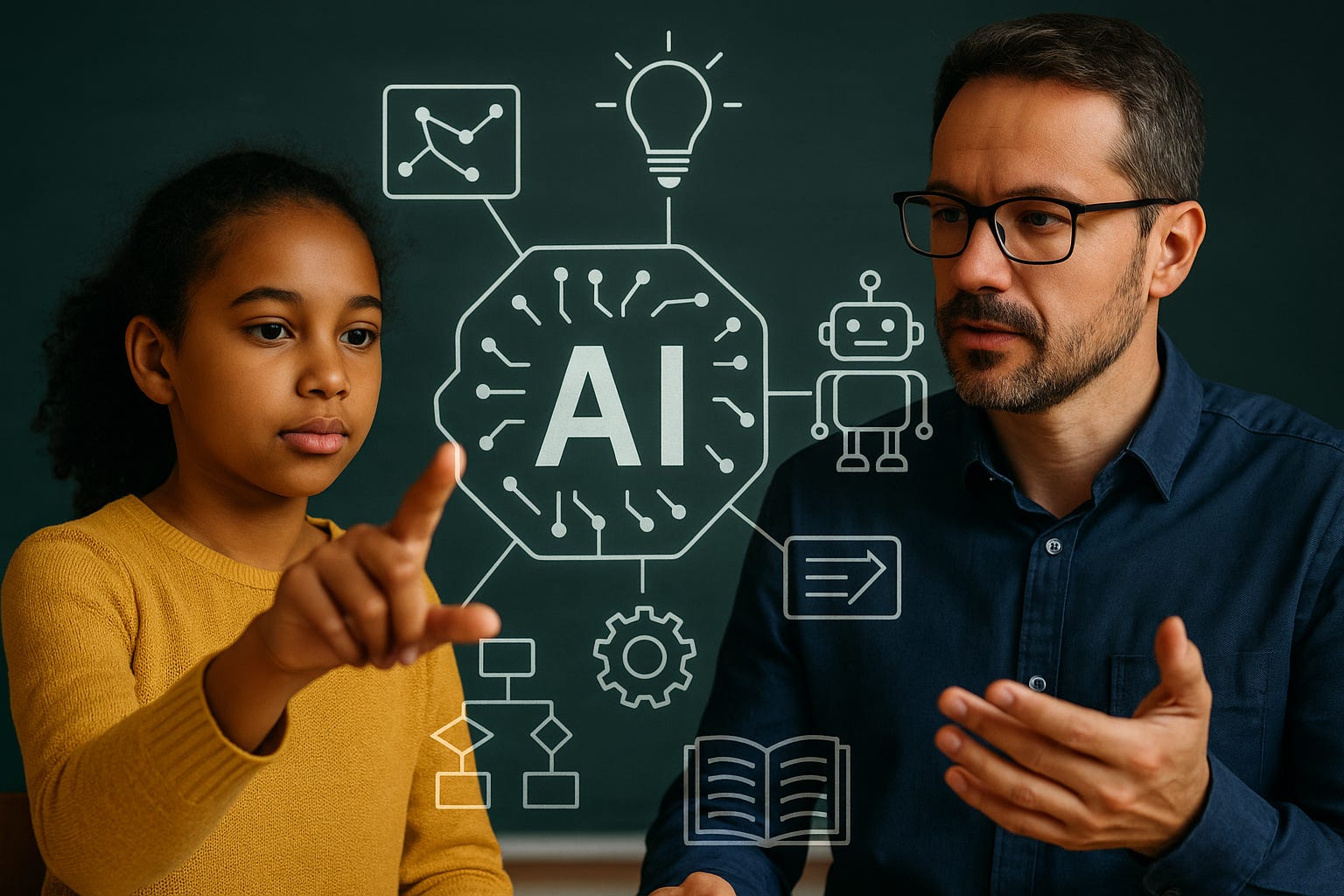
One promising pathway is meta-learning, which shifts the emphasis from memorization to adaptability. Instead of training students to retain and repeat, meta-learning equips them with the ability to ask the right questions, to research effectively, to identify their own strengths and weaknesses, and to apply insights across different domains. Frameworks such as the Center for Curriculum Redesign’s model for four dimensional learning place adaptability, curiosity, and critical reflection at the core of the educational process. In practice, this means students are encouraged to reflect on how they learn, to set their own goals, and to monitor their progress as active participants in their growth.
At the same time, AI is opening the door to classrooms where human teachers and intelligent systems work side by side. In these hybrid models, AI tutors can monitor individual progress and recommend resources, while teachers focus on relationships, mentorship, and creativity. Technologies like Lumilo glasses are already giving teachers real time insights into student engagement. AI powered assistants such as Khan Academy’s Khanmigo or SimPal can help students plan projects, test ideas, and refine their work. When this balance is achieved, the classroom becomes a space where human empathy and machine intelligence amplify one another.
This transformation also brings new importance to project based learning. Schools such as Valley New School in Wisconsin, High Tech High, and New Tech Network have long been pioneers in using real world challenges as the heart of education. AI now deepens that model by serving as a partner in brainstorming, simulating conversations, critiquing student work, and connecting concepts across different fields. Digital fluency in this context is not simply technical proficiency. It is the ability to understand what AI can do, when to question its results, and how to use it ethically. Students learn to design prompts, evaluate outputs, and make judgments about when human perspective is indispensable.
The results are significant. Schools that embrace these approaches are reporting stronger outcomes in complex problem solving, higher graduation rates, and graduates who exhibit creativity, resilience, and collaboration. These are precisely the qualities that will matter most in a future where an estimated sixty five percent of today’s primary school students may work in careers that do not yet exist.
The real task ahead is not to shield young people from automation but to empower them to thrive alongside it. By reimagining education as a process of cultivating meta-learners who can partner with AI, we prepare students for a world that values agility, empathy, and lifelong learning. The Shape of Tomorrow perspective is clear: the future belongs to those who carry not just facts in their heads but the skills and mindsets needed to make sense of an uncertain and rapidly evolving world.